|
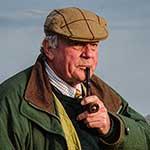
Major Barney Cockcroft LVO
Late Welsh Guards
by Paul de Zulueta
formerly Welsh Guards
|
Barney Cockcroft was a charming and gracious officer without whom the Regiment would have become a much duller place. When Barney served as Deputy Assistant Military Secretary in Hong Kong, the Commander British Forces, Hong Kong, John Chapple, later Field Marshal Sir John Chapple, remarked of Barney, ‘in no sense a thruster, but his courtesy, tact, discretion and diplomacy have been of great benefit to me and my staff here’.
Barney was one of the few Welsh Guards officers who could claim to have been brought up in Wales. His early childhood on the family farm in Snowdonia developed his adventurous spirit and a toughness which made him a natural for the Regiment and its prowess on the rugby field. He was commissioned in 1956 and immediately made his mark as an officer who took trouble over the welfare of his Guardsmen and for his leadership in the Battalion’s rugby team. He captained the team for three years winning the Army Cup in 1962. He was also selected to play for the Army against the Navy that same year, a match that the Army won 9-6.
Barney made the most of what the Army and the Regiment had to offer in those days. He much enjoyed an operational tour of Aden commanding The Prince of Wales’s Company. Once again, his conscientiousness over the well-being of his men bore fruit as the Battalion had a highly successful tour with no casualties. He had a hinterland outside the Army, field sports and shooting in particular, and a great affection for band music. He took the Welsh Guards Band on a tour of America. Pennsylvania, ‘Coal Country’, and Ohio, ‘Little Cardiganshire’, were sell-outs with its diaspora of well over 300,000 people of Welsh descent.
Barney much enjoyed the ceremonial side of soldiering for which he had an undoubted flair. He was commandant of the Royal Tournament in 1973 and played a central role, while serving in the MOD, organising the 40th anniversary of D Day in 1984.
Family was all-important to Barney. He married Audrey Kidd in 1960, the daughter of Colonel Bobby Kidd who commanded the 4th Royal Hussars in the Second World War. They were blessed with two children, one of whom, Rupert, joined the Welsh Guards. This was a delight for Barney but somewhat of a mixed blessing when he was offered the job of battalion second-in-command but had to turn it down on the quite reasonable grounds that he wanted his newly commissioned son to flourish in the Regiment free from his father’s gaze.
Barney’s most rewarding time as a soldier, husband and father was in Hong Kong in the late 70s when the soldiering was agreeable, the social life high energy and fast-paced, and friendships became life-long. Barney was instrumental in developing the now world famous Hong Kong rugby 7s tournament as well as organising much of the island’s ceremonial as the sun began to set on one of the great jewels of the British Empire.
Barney played to his strengths when he retired from the army working for the Greater London Territorial Army and volunteer reserve association with an office and flat just off the King’s Road. He was made a Deputy Lieutenant for Greater London and a member of Her Majesty’s Body Guard, an organisation with a great sense of camaraderie and loyal service to the Crown. On his retirement from The Body Guard, he was made a Lieutenant of the Victorian Order by The Queen in person who said, Barney, before you go, don’t forget this’.
Audrey died of cancer in 1997, a grievous blow to Barney, but he found solace in travelling in a Land-Rover with his tent on the top through the wilder parts of Southern Africa where his innate charm and infectious smile won him new friends along the way.
Although he never got over Audrey’s death, there was no shortage of admirers who ensured his last years were comfortable and untroubled despite his failing health. He also found great pleasure in his grandchildren and loved nothing better than helping out on the school run and watching them in sports matches. His two children, Rupert and Laura, were steadfast throughout.
Many former Welsh Guardsmen attended his funeral which took place on St David’s Day, as well as former and present members of The Body Guard whose friendship and loyalty meant so much to him. |
|